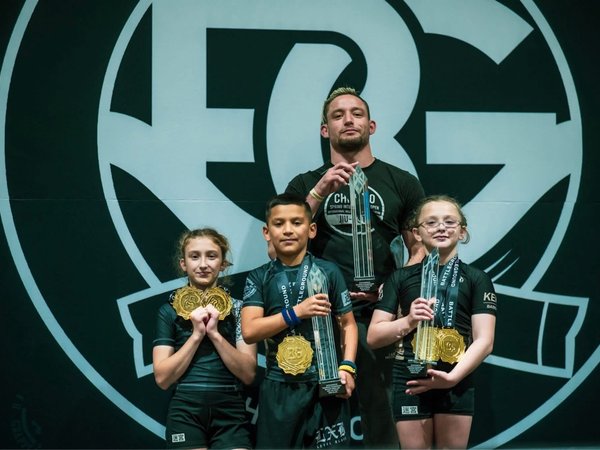
Walking into a martial arts academy for the first time can feel intimidating. We get it. You don't know the etiquette, the terminology, or whether you'll be completely lost. Here's the good news: every single person at Labyrinth BJJ was once exactly where you are now — nervous, curious, and wondering what they signed up for. This guide covers exactly what to expect at your first BJJ class, so you can walk in feeling prepared instead of anxious.
Before You Arrive
What to Wear
For your first class, you don't need a gi (the traditional uniform). Just wear comfortable athletic clothes that you can move in:
- A t-shirt or rash guard — avoid shirts with zippers, buttons, or hard graphics that could scratch a training partner
- Athletic shorts or joggers — board shorts work great; avoid shorts with pockets that can catch fingers
- No shoes on the mat — BJJ is practiced barefoot, and we keep our mats meticulously clean
- Remove all jewelry — rings, necklaces, earrings, and watches should be left in your bag
For kids, the same rules apply. Athletic clothes they'd wear to PE class are perfect. If your child decides to continue training, we'll help you get properly fitted for a gi at the right time.
Arrive 10–15 Minutes Early
When you walk into Labyrinth BJJ in Fulshear, you'll be greeted at the front desk. We'll have you sign a quick waiver, give you a brief tour of the facility, and introduce you to the instructor for your class. This is also a great time to mention any physical limitations, injuries, or concerns. We want to know these things so we can make your experience as positive as possible.
For parents bringing kids: you're welcome to stay and watch the entire class from our viewing area. In fact, we encourage it for the first few sessions. Seeing your child on the mats will tell you everything you need to know.
The Class Structure
While every class is different, here's the general flow you can expect for both kids and adult classes at Labyrinth:
Warm-Up (10–15 Minutes)
Class starts with a group warm-up led by the instructor. This isn't random stretching — BJJ warm-ups use movements that directly translate to techniques. You'll do hip escapes (shrimping), forward and backward rolls, bridging, bear crawls, and other movement patterns that feel unusual at first but become second nature quickly. Don't worry about doing them perfectly. Everyone stumbles through their first hip escape.
For kids classes, warm-ups often include games — think tag variations, relay races, and animal movement challenges. Kids don't realize they're training BJJ-specific movements because they're having too much fun.
Technique Instruction (20–25 Minutes)
The instructor demonstrates two or three techniques, breaking each one down step by step. You'll watch the demonstration, then pair up with a partner to practice. In your first class, you'll be paired with an experienced student or instructor who will patiently walk you through each step.
The techniques might be a guard pass, a sweep, an escape from a common position, or a submission. Don't worry about memorizing everything. The goal of your first class isn't mastery — it's exposure. You're planting seeds that will germinate over weeks and months of practice.
Positional Drilling or Sparring (15–20 Minutes)
For kids classes, this phase usually involves positional games — "King of the Mat," guard passing drills, or controlled scrambles where students try to maintain or escape specific positions. It's active, fun, and builds practical skills without the intensity of full sparring.
For adult classes, this is typically live rolling (sparring). As a first-timer, you will not be expected or pressured to spar. If you want to watch and ask questions, that's completely fine. If you want to try a controlled positional round with an experienced partner, even better. The key word is "controlled" — your partner will match your intensity and guide you through the experience.
Cool-Down and Closing (5 Minutes)
Class ends with stretching, a brief recap from the instructor, and a handshake or fist bump line where everyone thanks their training partners. This ritual is one of the things that makes BJJ culture special — you always acknowledge the people who helped you train. For kids, this is where they learn to shake hands, look someone in the eye, and say "thank you." It's a small thing that makes a big difference.
What Kids Experience vs. Adults
The core structure is similar, but the emphasis differs:
Kids classes are more game-based, with higher energy and more encouragement. Instructions are simpler, repetitions are shorter, and there's more positive reinforcement. Our kids instructors are trained to keep engagement high and frustration low. Your child will leave sweaty, smiling, and asking when they can come back.
Adult classes are more technique-focused, with detailed explanations of the "why" behind each movement. The pace is measured, the atmosphere is supportive, and the instruction is world-class. Adults often find their first class more intellectually stimulating than they expected — the problem-solving aspect of BJJ is what hooks most people.
Common First-Class Concerns (And Why They Don't Matter)
"I'm not in shape enough to start."
This is the most common excuse we hear, and it's backwards. You don't get in shape to start BJJ — you start BJJ to get in shape. Your first class will be humbling, and that's okay. Everyone starts somewhere. Within a few weeks, your conditioning will improve dramatically because there's no workout quite like grappling.
"I'm worried about getting hurt."
Safety is our top priority. First-timers are paired with experienced partners who know how to train carefully. There is no striking in BJJ, and all submissions are taught with the tap — the universal signal that means "stop." Tap, and your partner releases immediately. No exceptions. Check our FAQ section for more on our safety protocols.
"I don't know anything about BJJ."
Perfect. That's exactly the right starting point. No one expects you to know a guard from a mount on day one. Our instructors and students are genuinely patient with beginners because every single one of them was a beginner once. The BJJ community has a deep culture of helping new people — it's one of the most welcoming athletic communities in the world.
"My kid is shy and won't participate."
We see this regularly, and it almost always resolves within two or three classes. Shy kids often thrive in BJJ because the structure and clear expectations actually reduce social anxiety. They know exactly what's expected, they have a partner to work with, and they're too busy learning techniques to worry about being watched. Our instructors are experts at bringing quiet kids out of their shells without pushing them too hard.
After Your First Class
After class, take a moment to chat with the instructor and ask any questions. There's no pressure to sign up on the spot. We want you to go home, think about it, talk to your family, and make a decision that feels right. Most people who try a class come back — not because of a hard sell, but because they experienced something genuinely different from every other activity they've tried.
View our full class schedule to find the right time for your family. We offer classes seven days a week for all ages and experience levels.