If you're the parent of a child with ADHD, you've probably tried multiple activities looking for the one that clicks. Soccer where they wandered off the field. Baseball where they couldn't stand still. You're not looking for a miracle — you're looking for something that channels their energy productively and helps them develop focus and self-regulation.
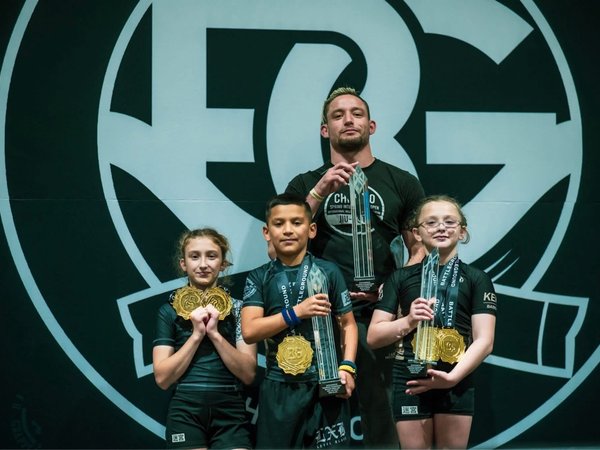
Brazilian Jiu-Jitsu is that activity for a remarkable number of ADHD kids. I've been coaching youth BJJ for over a decade at Labyrinth BJJ, and some of our most dedicated, successful students are kids whose parents were told they "couldn't focus" or "couldn't sit still." On the mats, those same kids are laser-focused, engaged, and thriving. Here's why.
Focus Through Engagement, Not Willpower
The core challenge of ADHD isn't an inability to focus — it's difficulty sustaining attention on tasks that aren't inherently stimulating. Ask an ADHD child to complete a worksheet, and their mind wanders. Give them a video game, and they'll hyperfocus for hours. The difference is engagement.
BJJ is engagement on every level. When your child is on the mats working with a partner, every second demands active problem-solving. Where is their weight? What grip are they fighting for? What submission is available? There is no downtime, no standing around, and no passive observation. The activity itself commands attention in a way that worksheets and lectures never can.
This isn't a hack or a workaround — it's how ADHD brains are designed to operate. They thrive when the task is dynamic, physically engaging, and immediately consequential. BJJ provides all three, which is why ADHD kids who struggle to pay attention in school often show remarkable concentration during training.
Proprioceptive Input — The Sensory Benefit
Many children with ADHD also have sensory processing differences, and one of the most effective sensory inputs for regulation is proprioception — deep pressure and resistance against the body. Occupational therapists use weighted blankets and resistance activities for this purpose. BJJ provides it naturally and abundantly.
During grappling, your child experiences constant deep pressure: being squeezed in guard, bearing weight in mount, pushing and pulling against a resisting partner. This input has a calming, organizing effect on the nervous system. Parents frequently tell us their ADHD child is noticeably calmer and better regulated for hours after training.
Clear Rules and Structure
ADHD kids often struggle in environments with vague expectations and unstructured time. "Go play" is a recipe for chaos. "Sit quietly and wait" is a setup for failure. What works is clear structure, consistent rules, and predictable routines — which is exactly what a well-run BJJ class provides.
At Labyrinth, every class follows a consistent format: warm-up, technique instruction, drilling, sparring, cool-down. Kids know what to expect and what's expected of them. Mat etiquette is taught from day one — bow when you step on the mat, listen when the coach is speaking, tap when you're caught, shake hands after rolling. These aren't arbitrary rules — they're a behavioral framework that gives ADHD kids the structure they need to succeed.
Our coaches understand that structure doesn't mean rigidity. Classes are structured but dynamic, with enough variety to hold attention and enough consistency to provide security. That balance is critical for ADHD kids, and it's something our coaching staff practices intentionally.
A Physical Outlet That Actually Works
Every parent of an ADHD child knows the importance of physical activity. The science is clear: exercise improves executive function, reduces hyperactivity, and increases the availability of dopamine and norepinephrine — the same neurotransmitters targeted by ADHD medications. But not all physical activities are created equal.
Team sports often frustrate ADHD kids because of the downtime. Standing in the outfield. Sitting on the bench. Waiting for your turn. BJJ has essentially zero downtime. From the moment class starts, your child is moving, engaging, and burning energy. The intensity is high, the involvement is total, and by the end of class, your child has gotten the kind of full-body workout that genuinely regulates their system.
Unlike gym workouts or running, which require self-generated motivation, BJJ provides external motivation through partner interaction and technique challenges. The activity itself pulls them forward.
Routine and Discipline Without Rigidity
BJJ teaches routine — same time each week, same class structure, same gi, bowing onto the mat. These repetitions create predictability that helps ADHD kids function at their best.
But unlike a structured classroom, the discipline here is physical, not passive. An ADHD child who can't sit still thrives when "discipline" means engaging their entire body — holding a position, controlling a partner through a technique sequence, drilling until it's muscle memory. This builds neural pathways for self-control that transfer to other areas of life.
The Belt System Provides Visible Progress
ADHD kids frequently struggle with long-term goals. What works instead is frequent, visible feedback loops — and the BJJ belt and stripe system provides exactly that.
Stripes are earned every few weeks or months. Belt promotions happen several times per year. Each is a concrete marker of progress that the child can see, touch, and show to family. This provides the short-term motivation ADHD kids need while teaching long-term progression — consistent effort leads to meaningful achievement.
Social Skills in a Structured Setting
Many ADHD children struggle socially — not because they don't want friends, but because impulsivity and difficulty reading cues make relationships challenging. BJJ provides a structured social environment where the rules of engagement are clear. You take turns, communicate about technique, learn to be gentle with smaller partners and assertive with bigger ones.
At Labyrinth, we see ADHD kids who initially struggled with social interaction become confident, connected members of the academy community. The friendships formed on the mats are built on mutual respect and shared effort.
What Parents Should Know Before Starting
If you're considering BJJ for your ADHD child, here are a few things to keep in mind:
- Talk to the coaches first. Let them know about your child's ADHD. Good coaches — like ours at Labyrinth — will adapt their approach accordingly, offering extra patience, clearer instructions, and strategic partner pairing.
- Give it time. Your child may need 3–4 classes before they settle into the routine. The first class might be overwhelming. That's normal. Don't judge the activity by the first session alone.
- Consistency matters more than frequency. Two classes per week, every week, is far better than five classes one week and none the next. Build a routine and stick to it.
- Celebrate effort, not just outcomes. If your child stayed focused during the technique demonstration, that's a win. If they controlled their frustration when they got tapped, that's a win. The outcomes — stripes, belts, tournament medals — will come naturally from consistent effort.
- Communicate with the coaches regularly. Share what's working and what isn't. A strong coach-parent partnership makes a huge difference for ADHD kids.
The Bottom Line
Is BJJ good for kids with ADHD? In our experience — backed by years of coaching and confirmed by hundreds of parents — it's one of the best activities available. It meets ADHD kids where they are: active, energetic, and needing engagement to focus. It provides the sensory input, structure, physical outlet, and visible progress that help ADHD kids regulate and thrive. And it does all of this while teaching real martial arts skill, genuine self-defense ability, and character traits that last a lifetime.
Your child doesn't need to be "fixed" before they start BJJ. They need an environment that works with their brain, not against it. That's what the mats provide. Visit our FAQ for more questions, or reach out to us at (281) 393-7983 to discuss your child's specific needs.